 Close your eyes and picture this: You’re staring from the deck of a small ship at the land now known as Virginia. The year is 1607, and you are Capt. John Smith. What you see in your mind’s eye is probably something like the images that open Terrence Malick’s 2005 film The New World: a virgin forest of stately trees bathed in that certain slant of light. What you’re ignoring is the understory. Close your eyes and picture this: You’re staring from the deck of a small ship at the land now known as Virginia. The year is 1607, and you are Capt. John Smith. What you see in your mind’s eye is probably something like the images that open Terrence Malick’s 2005 film The New World: a virgin forest of stately trees bathed in that certain slant of light. What you’re ignoring is the understory. |
In the science of forestry, the understory is the mix of seedlings and saplings, shrubs and herbs and all the smaller trees that grow happily in the shade of the bigger trees or wait patiently for wind or fire to expose them to the sun.
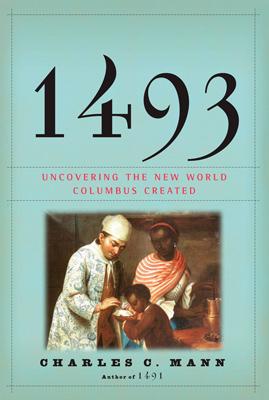
In the discipline of history, “understory” doesn’t mean anything. I wish it did, because the word would elegantly describe Charles C. Mann’s 1493, which is about some of the people, animals and plants ignored by “world history.” Mann’s previous book, 1491, drew attention to Native American societies before the European conquest. (The reason that the English walked so easily through the Virginian understory was that it was anything but virgin: it had been worked for generations by the natives.) Now, in 1493, Mann lays out the ecological and economic interplay of the European and, importantly, African arrival in America; Mann’s epic ambition spans continents, themes and five centuries of history.
 Paul Statt Communications