Making Business Better

1 August 2014

CSR is an acronym for “corporate social responsibility.” It’s the way a business entity regulates itself in areas such as health, environment, human rights and other externals to its primary mission.

BP is a big oil company, and not an acronym for anything. Founded in 1909 as the Anglo-Persian Oil Co., it changed its name to the Anglo-Iranian Oil Co. in 1935, to British Petroleum in 1954 and to BP in 2001. In 1999 Christine Bader ’93 went to work for this nonagenarian corporation, and by her own admission, she fell in love.

The Evolution of a Corporate Idealist is the story of that romance, and it’s not exactly happily-ever-after.

The honeymoon was sweet. Bader (below) went to Indonesia, where BP was overseeing extraction of natural gas from the Tangguh gas field, one of those risky energy sources that high prices have made potentially profitable. BP knew the risks included environmental damage, political unrest and local economic disruption.

Christine Bader ’93

By most accounts, including her own, Bader and BP did well with their social responsibility in Tangguh. She moved on to China, where BP was collaborating with a Chinese company; that work seemed more frustrating.

Back at corporate headquarters in London, BP paid Bader to work part-time as an adviser to the United Nations special representative for business and human rights. Bader is justifiably proud of the results of this work, the “Ruggie Principles,” which protect and respect human rights in business. She started full-time at the UN in 2008, yet her heart belonged to BP.

If this is a love story, then in 2010 Bader found her lover in bed with the babysitter.

In the Gulf of Mexico, BP’s Deepwater Horizon oil rig explodes. Workers die. Crude oil leaks. BP backpedals. At a 2010 hearing Rep. Henry Waxman (D-Calif.) summed up how bad BP looked: “There is a complete contradiction between BP’s words and deeds.”

Bader can’t disagree and suffers a crisis of confidence. After a chat with a friend—also a Corporate Idealist, one of the sad ones “so marginalized that they don’t even know” they have no power in the corporation, Bader asks a probing self-critical question:

“Am I that deluded as well? Do I sound just as ridiculous, talking about the great things BP has done on human rights on a few projects in far-flung corners of the world, when the company’s behavior much closer to home appears to have been the opposite of exemplary? … Perhaps.”

This is brave writing, because this reader can only reply, “Well, yes. You sound like a lover betrayed, but trying to believe.”

Now a visiting scholar and lecturer at Columbia, Bader believes Corporate Idealists can “nudge our companies toward a vision of a better future.” Nudge is also the title of an important 2008 book that argued for a “libertarian paternalism” to offset the false assumption that most people make choices that are in their best interests. Perhaps this is also true for corporations—which are, after all, our fellow citizens, for better or worse.

Bader extends her metaphor this way: “The honeymoon is over. … It is time to settle in for the long haul, recognizing that my partner isn’t perfect and loving him all the more for it. Despite the failings of big business, I find myself still optimistic about its ability to make a positive difference in the world.”

It’s cause for some optimism that Bader and others like her are working to maintain the conscience of companies like BP. It’s not enough to make me trust the company, but it helps.

Corporate Idealist is no chronicle of natural selection. Bader was not a young person passionate about oil drilling who evolved an ideal view of the industry; she went in as an idealist to make business more responsible.

That’s the paradox of the Corporate Idealist. Milton Friedman wrote that, within the law, the only social responsibility of business is “to use its resources and engage in activities designed to increase its profits.” The Corporate Idealist is no more engaged in those activities than the army chaplain is in fighting the war. What’s the difference between a Corporate Idealist and a Military Chaplain? In the daily battles of business, there are no believers in the foxholes.


Mom, Romney, Mammon: Some Doubts about the Debt

15 October 2012

When I graduated from Amherst College in 1978, I was $3,000 in debt, and deeper than that in despair about it.

The $3,000 seems laughable now. But in our family–poor New Hampshire farm stock, abandoned by our father and hounded by his creditors–debt was a moral issue. My mother and older brother, who had not gone to college, expressed a great deal of pride and hope in me, and encouraged the student loan. But our guilt and shame at “going into debt” was nothing to laugh at.

Our Puritan attitudes made even all-American activities like buying a house or financing a new car problematic. Our moral estimation of debt’s evils was typical. Laban Todd, the farmer I worked for (a dollar fifty an hour, cash) used to joke, if we had to wait for three cars to pass before we crossed the road with a load of hay, “It wouldn’t be so crowded if people could only drive cars that were paid for.”

The moral equivalence of debt with sin goes way back. In our little white church, we asked Our Father to “forgive us our debts, as we forgive our debtors” No weaseling about “those who have trespassed against us” for us. We asked for a cash payback: a marvelous idea, but even a child knew, unlikely. Debt, like sin, would be always with us, unfortunately.

We were misled. No doubt, debt remains ubiquitous, but it seems less like a sin these days. Debt is the lifeblood of the economy–or, if you prefer a moral echo in your metaphor, its daily bread.  Debt feeds the global economic system of the 21st Century and sustains it. Debt is, in fact, what creates money, according to Philip Coggan, the author of Paper Promises: Debt, Money and the New World Order (2012). Money is debt.

Forgive me, Mom: but debt is a Very Good Thing.

Forgive me also, Philip Coggan, for falling into the trap you laid, “of making blanket statements, along the lines of the comic history book 1066 and All That,” saying debt is Good Thing, thrift is a Bad Thing.

“History is what you remember” was the fundamental lesson of that delightful book. And what you remember, what you believe, what you trust matters, in matters of money. Coggan’s book is all about confidence, peopled as it with the Wizard of Oz, Peter Pan kept aloft by audience belief, and Confidence Fairies. I could sum up Paper Promises with a paraphrase from 1066:  “Money is what you believe it is.”

Governments and businesses, colleges and universities, hospitals and health insurers, auto manufacturers–any entity with any capital has figured out that debt can do a world of good. Some very smart people built an entire “financial services industry” on this knowledge, including the “private equity” business, where Mitt Romney grew rich.

“Mitt Romney has spent his career executing turnarounds in the private sector, the Olympics, and state government.” That’s his official position, as stated in his campaign literature. So’s this:

“While getting the federal debt under control will be a long and arduous task, the first step toward recovery is admitting we have a problem and refusing to allow any more irresponsible borrowing. We must live within our means, spend only what we take in…”

This isn’t logic, it’s a scolding: “The debt is immoral,” Romney said in debate, but  I can hear Mom’s voice. You’re spending more money than you have, and that’s a Bad Thing. Romney’s latest advertising features a Mom and a baby worrying about “Obama’s debt,” but not a word about where, say, they might want to invest it. like a school or a hospital.

This is an appeal to morality, not economics. Its advantage is that it avoids any specific plan.

But Romney knows better. Debt is not immoral, Mr. Romney, and you know it. You have made a lot of money in financial services:  I don’t pretend to understand finance–least of all, the complicated leverages and hedges practiced by private equity experts like Bain Capital.

But I know this much: private equity “executes turnarounds” by buying a business–with borrowed money–expecting that the company will increase in value. That’s no more immoral than my Mom  investing $3000 she didn’t have in my college education, hoping that I would increase in value. (I did.) And if you and Mom and l can borrow without moral turpitude, certainly the United States of America can.


http://www.thedailybeast.com/newsweek/2012/10/14/david-stockman-mitt-romney-and-the-bain-drain.html


The Proposed Reading Viaduct Park in Philadelphia

8 May 2012

Little noted in the excitement here about building “our own High Line:” The Reading Viaduct, unlike anything in Manhattan, will connect the parts of Philadelphia with the greatest densities of Black (orange)  and Asian (blue)  residents, and makes a turn toward the Hispanic (green), too.


A River Still Runs

8 May 2012

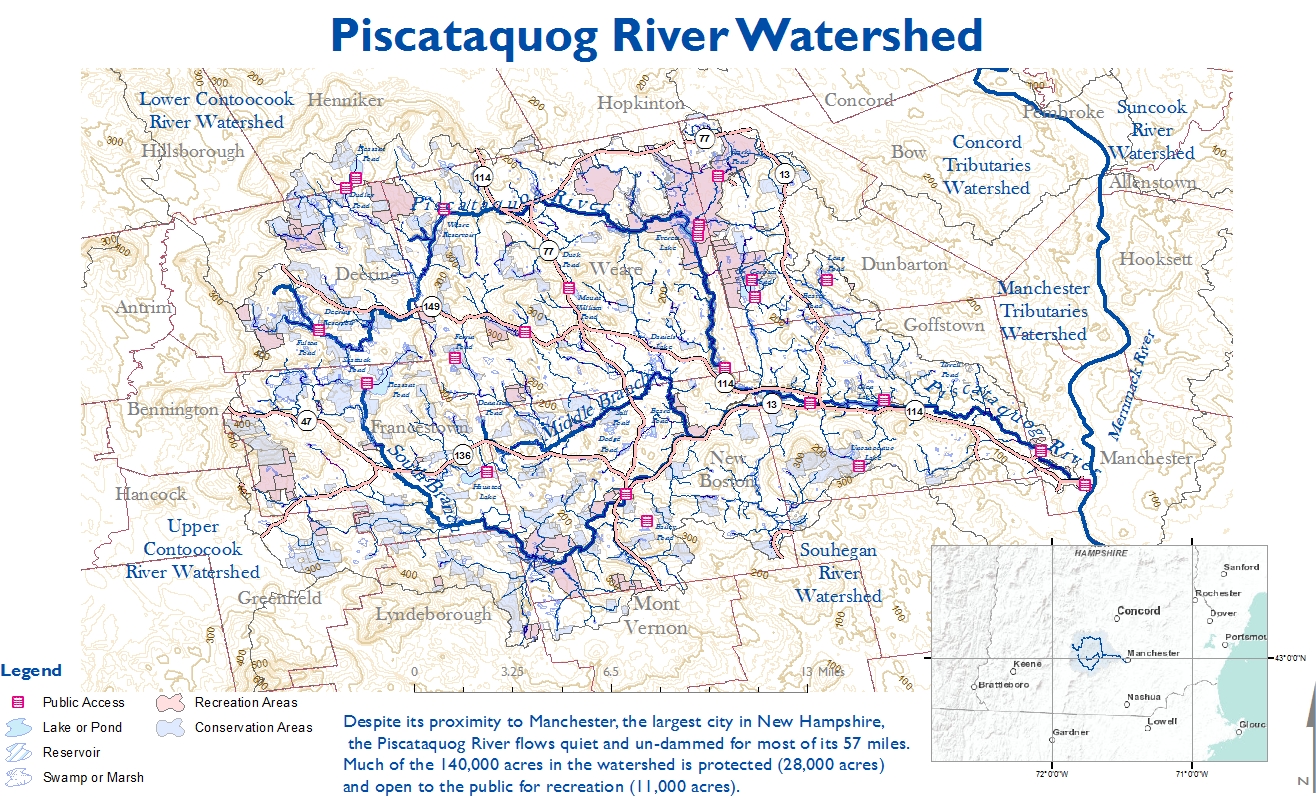
I grew up near the Piscataquog River in New Hampshire, and have been pleased to see it’s been well protected from development. This map shows how well.


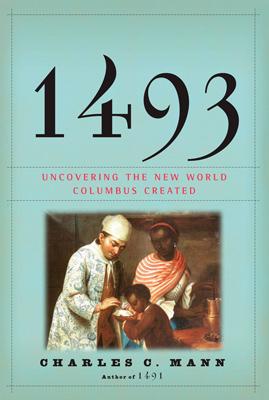
1493: Uncovering the New World Columbus Created, by Charles C. Mann

13 March 2012


imageClose your eyes and picture this: You’re staring from the deck of a small ship at the land now known as Virginia. The year is 1607, and you are Capt. John Smith. What you see in your mind’s eye is probably something like the images that open Terrence Malick’s 2005 film The New World: a virgin forest of stately trees bathed in that certain slant of light. What you’re ignoring is the understory.

In the science of forestry, the understory is the mix of seedlings and saplings, shrubs and herbs and all the smaller trees that grow happily in the shade of the bigger trees or wait patiently for wind or fire to expose them to the sun.

In the discipline of history, “understory” doesn’t mean anything. I wish it did, because the word would elegantly describe Charles C. Mann’s 1493, which is about some of the people, animals and plants ignored by “world history.” Mann’s previous book, 1491, drew attention to Native American societies before the European conquest. (The reason that the English walked so easily through the Virginian understory was that it was anything but virgin: it had been worked for generations by the natives.) Now, in 1493, Mann lays out the ecological and economic interplay of the European and, importantly, African arrival in America; Mann’s epic ambition spans continents, themes and five centuries of history.


“Where the Skills Are:” But You Can’t See Them

23 September 2011

Richard Florida offered an interesting take on the importance of  “social skills” in Where the Skills Are – Magazine – The Atlantic.

The map that illustrates the article is merely that: an illustration. We have –and I mean, I have–the technological skills to create maps that can be used as tools. Whatever you call this particular hodgepodge, it fails as a map, as a chart, and frankly even as an illustration. It presents no visual information, no way to tease out any information, and yet, does offer shadows of an impossible early-morning sun.


“How Many Pennsylvanians Live Within 25 Miles of a State Park?”

19 May 2011

Maurice Goddard, the head of the Pennsylvania Department of Forests and Waters from 1955 until 1979, was the godfather of the State Parks system.In 1955, “Goddard took the position and set a goal of a state park within 25 miles of every resident of Pennsylvania. “We took a big map of Pennsylvania and drew circles around Philadelphia, Pittsburgh, the Wyoming Valley, and Harrisburg,” he said.”Today we can improve on Goddard’s primitive geographic information system. I created a series of maps for the Pennsylvania Parks and Forests Foundation on Goddard’s theme. The first two maps I produced, using data from the Pennsylvania Spatial Data Access (PASDA) website, concentrated on population. One showed the largest cites on Pennsylvania and its parks; the other the most populous year 2000 census tracts.

Read the rest of this entry »

A Coke and a Smile?

29 March 2011

How can a law improve public health? In 2011, Public Health Law Research is asking “What is the impact of laws addressing consumption and purchase of sugar-sweetened and citric-acid drinks on oral health? ” The study, based at the Appalachian School of Law, is looking at “Mountain Dew Mouth” in Appalachia, the persistently poor teeth among America’s  impoverished hillfolk.

Back in 1911, in a courtroom in Chattanooga, it was caffeine, not sugar, that was on trial. According to Murray Carpenter in today’s (March 28, 2011) New York Times,

The trial grabbed headlines for weeks and produced scientific research that holds up to this day — yet generated no federal limits for caffeine in foods and beverages.

Those levels remain virtually unregulated today. As two researchers recently wrote in The Journal of the American Medical Association, nonalcoholic energy drinks “might pose just as great a threat to individual and public health and safety” as alcoholic ones, and “more research that can guide actions of regulatory agencies is needed.”

Nobody used the term “energy drink” in 1911, but the drink that was on trial in Chattanooga contained as much caffeine as a modern Red Bull — 80 milligrams per serving.

The drink was Coca-Cola.

It’s an entertaining story, and also, in the end, enlightening if dispiriting to twenty-first century public health law researchers.  “Harvey Washington Wiley, the “crusading chemist” who led the Bureau of Chemistry in the United States Department of Agriculture, had brought a lawsuit against the Coca-Cola Company, accusing it of adulterating the drink by adding a harmful ingredient: caffeine.” The Atlanta company hired its own expert to to test people who drank the stuff, taking advantage of the fact that most existing research had served Coke only to lab rats. The result was

a four-week trial dominated by anecdotal, contradictory or sloppy testimony.

“[The Coca-Cola scientist’s] testimony was by far the most interesting and technical of any yet introduced,” The Chattanooga Daily Times reported. But the jury never issued a verdict based on the science, because a week later the judge granted Coca-Cola’s motion to dismiss.

In court, it’s seldom the science or research that decides the case.


Why Build a Bridge when the River is Shallow?

13 May 2009

180px-NetworkTopology-MeshGwen Shaffer, a doctoral candidate, adjunct professor and researcher in communications at Temple University, recently recieved a National Science Foundation grant to complete her dissertation on the potential for high-speed, hyperlocal, robust ad hoc “mesh networks” to bridge the so-called “digital divide.” 

Shaffer says that when someone opens up a network to the neighbors, “it creates a sense of community” that corporate internet access simply cannot provide. The technology is simple; Shaffer has seen how it works in Berlin and Barcelona, as well as bucolic Denmark. This is technology that bears watching.  

Cheap Concrete from Ancient Egypt

19 November 2007

When you take on the sole survivor of the Seven Wonders of the Ancient World, the modern world takes notice. Michel Barsoum never sought fame as an Egyptologist, and whenever the Drexel material scientist tells the story of how he helped reveal the ancient secret of the construction of the pyramids, he starts by insisting, “This is not my day job.”

Barsoum helped prove the theory that the pyramids were partially constructed of concrete. Not content with that intriguing possibility, Barsoum charged ahead to investigate how the ancient Egyptians could have made concrete, millennia before its “invention” by the Romans. “How energy intensive or complicated can a 4,500 year old technology really be?” Barsoum asks. The answer, he reports, is that “it is not very complex or costly” and thus, may be useful even today.

Barsoum and his team have invented—or re-invented—an inexpensive, environmentally sustainable and widely available building material: the kind of concrete he thinks the pyramid builders used. What makes Barsoum most proud is the potential practical application of the “geopolymer” that he and his team have reconstructed. A “chance” discovery about the ancient world, made by an engaged engineer, has the potential to help solve some of the environmental and economic problems that vex the world today.

In 2001 Barsoum took a cold call from a friend of a retired colleague, who wanted to know how much Barsoum knew about “the mysteries of the Great Pyramids of Giza.” Barsoum was born in Egypt and has a bachelor’s degree in materials engineering from the American University in Cairo, but didn’t know much about the construction of the famous monuments.

Conventional wisdom offered a familiar image: thousands of slaves hauling carved limestone blocks up ramps hundreds of meters long. But in 1982 a French researcher had suggested that the stones of the pyramids were actually made of a very early form of concrete created using a mixture of limestone, clay, lime and water.

“It was at this point in the conversation that I burst out laughing,” recalls Barsoum. If the pyramids were indeed cast in concrete, not stacked blocks of stone, he says, it could be proved with just a few hours of modern electron microscopy of the structure of the materials.

It hadn’t been tried. Barsoum, who says today that “stubbornness” is one of the important qualities a good researcher needs, decided to try it, and “What started as a two-hour project turned into a five-year odyssey with one of my graduate students, Adrish Ganguly, and a colleague in France.”

Barsoum and the team analyzed the mineralogy of parts of the Khufu pyramid and found mineral ratios unknown in naturally occurring limestone sources. From the geochemical mix of lime, diatomaceous earth and limestone aggregate, they concluded, “the simplest explanation” would be that it was cast concrete. Construction with limestone concrete could help explain how the Egyptians were able to complete such massive monuments so long ago. They used concrete blocks, Barsoum said, on the outer and inner casings and probably on the upper levels, where it would have been difficult to hoist carved stone.

“The sophistication and endurance of this ancient concrete technology is simply astounding,” Dr. Barsoum wrote in a report in the December 2006 issue of The Journal of the American Ceramic Society. John Noble Wilford wrote in The New York Times that “This would be the earliest known application of concrete technology, some 2,500 years before the Romans started using it widely in harbors, amphitheaters and other architecture.”

It isn’t its aura of romantic adventure and ancient mystery that excites Barsoum about this research. It’s much more practical. After all, he says, “At the end of the day, we may be wrong about the pyramids. Nature is very resourceful. What I know for sure is that we are now making this geopolymer. And the ingredients are simply dirt, dirt, dirt and water.”

When he mentions “dirt, dirt, dirt and water” Barsoum’s eyes light up. The import of such a simple recipe for such an extraordinary material also is firing the imagination of his engineering students from freshmen to seniors. Barsoum says, “This ancient variety of concrete can be made just about anywhere in the world from readily available materials, at a very low cost, and without producing the pollution of traditional methods.”

It’s easy to make. Barsoum’s undergraduates work with it all the time: he keeps a cast representation of a cat in his office, and it’s beautiful: as smooth and shiny as marble. The possibilities for housing, transportation and infrastructure, in places that where energy and money are limited, are limitless.

“The basic raw materials used for this early form of concrete–limestone, lime and diatomaceous earth—can be found just about anywhere.” Barsoum quickly adds that this simple construction method would be cost effective, long lasting, and much more environmentally friendly than the current building material of choice. It’s estimated that the manufacture of Portland cement puts 6 billion tons of CO2 annually into the atmosphere. The ancient Egyptian method is practically pollution-free.

“Ironically it turns out the study of these four thousand year old rocks,” Barsoum says, “isn’t about the past, it’s about the future of the planet.”

###

Barsoum, Distinguished Professor in the Department of Materials Science and Engineering, received the Drexel University Research/Scholarship Award in 2007 for the discovery of the kinking nonelastic deformation, a fully reversible deformation mode which is observed in a wide range of materials including geological materials, ceramic materials, graphite and hexagonal metals. This discovery is expected to have major ramifications for the development of new high damping, high strength and high toughness structural materials.