Very Deep Science

26 May 2009

2638_67246643893_67194923893_2246672_2977181_nWhile the flashy coral reefs get all the attention–at least from the ecologically-minded–some strange creatures have found ways to thrive at “cold seeps” and “hydrothermal vents” in the deep oceans. Simple tubeworms often work as eco-system engineers, making an inhospitable environment friendlier to other kinds of life.

The possibilities that suggests to the human species? “The deep sea is the largest habitable space on earth,” says Erik Cordes, a professor of biology at Temple University. “But not so very long ago, most scientists believed that the very deep sea was pretty much a huge flat mud plain, empty of life. Not until we got access to these environments did we realize how complex and diverse it really is. We’ve only started to appreciate how varied the terrain is and how that affects its diversity.”

As Cordes wrote in the abstract: “Shortly after the discovery of chemosynthetic ecosystems at deep-sea hydrothermal vents, similar ecosystems were found at cold seeps in the Gulf of Mexico. Over the past two decades, these sites have become model systems for understanding the physiology of the symbiont-containing megafauna and the ecology of seep communities worldwide.”

ResearchBlogging.org
Cordes, E., Bergquist, D., & Fisher, C. (2009). Macro-Ecology of Gulf of Mexico Cold Seeps Annual Review of Marine Science, 1 (1), 143-168 DOI: 10.1146/annurev.marine.010908.163912


Obesity, Diabetes, and Sleep

22 May 2009

This is the kind of research that might be easy to make light of: “a fat old man snoring” pretty much sums up what most of us imagine sleep apnea looks like. But it’s serious:  a new study in Diabetes Care found that the disorder is widely undiagnosed among obese individuals with type 2 diabetes: nearly 87 percent of participants reported symptoms, but were never diagnosed.

“Doctors who have obese patients with type 2 diabetes need to be aware of the possibility of sleep apnea, even if no symptoms are present, especially in cases where the patient has a high BMI or waist circumference,” said Gary Foster,the study’s lead author and director of the Center for Obesity Research and Education at Temple University.

Currently, more than half of obese or overweight individuals have diabetes, the seventh leading cause of death in the United States.

Other authors were Kelley Borradaile (Temple); Mark Sanders, Anne Newman and  David Kelley, (University of Pittsburgh); Richard Millman and Rena Wing (Brown University); Garry Zammit (Clinilabs); Thomas Wadden, Valerie Darcey and Samuel Kuna, (University of Pennsylvania); F. Xavier Pi SUnyer (Columbia University); and the Sleep AHEAD Research Group.  Funding was provided by grants from the National Institutes of Health:  National Heart, Lung, and Blood Institute and National Institute of Diabetes and Digestive and Kidney Diseases.

ResearchBlogging.orgFoster, G., Sanders, M., Millman, R., Zammit, G., Borradaile, K., Newman, A., Wadden, T., Kelley, D., Wing, R., Pi Sunyer, F., Darcey, V., Kuna, S., & , . (2009). Obstructive Sleep Apnea Among Obese Patients With Type 2 Diabetes Diabetes Care, 32 (6), 1017-1019 DOI: 10.2337/dc08-1776


Why AIDS Affects the Mind

22 May 2009

“AIDS dementia” is real: the decline in mental function is sometimes the first sign that a patient has been infected with the human immunodeficiency virus (HIV). AIDS dementia is one of the few conditions caused directly by the virus. But how does it affect the brain?

A team at the Temple University School of Medicine, led by Bassel E. Sawaya, associate professor of neurology, has discovered a mechanism: it’s a viral protein (vPr) produced by HIV, that can activate an “oxidative stress pathway” in the brain, which can lead to cell death. 

This research improves understanding of how HIV works in the brain, and promises to improve treatment of AIDS dementia. It was conducted in the Temple University Center for Neurovirology in collaboration with researchers from Temple’s Departments of Neuroscience and Biology. It was funded through grants from the National Institutes of Health.

Deshmane, S., Mukerjee, R., Fan, S., Del Valle, L., Michiels, C., Sweet, T., Rom, I., Khalili, K., Rappaport, J., Amini, S., & Sawaya, B. (2008). Activation of the Oxidative Stress Pathway by HIV-1 Vpr Leads to Induction of Hypoxia-inducible Factor 1 Expression Journal of Biological Chemistry, 284 (17), 11364-11373 DOI: 10.1074/jbc.M809266200


Illumination Magazine | Spring 2009

20 May 2009

cover_s09Illumination Magazine | Spring 2009

Posted using ShareThis 


This was the best-looking university research magazine in the country: designed and printed to a standard that made it an argument for printed publications. Now it’s “web-only.”


Why journalists deserve low pay | csmonitor.com

20 May 2009

minHtmlTopWhy journalists deserve low pay | csmonitor.com

Posted using ShareThis 

Richard Picard might be chanting, “The journalist is dead; Long live the journalist.”

Picard defines a journalist as a person with “the capabilities to access sources, to search through information and determine its significance, and to convey it effectively.” Until shockingly recently, you needed the support of an institution to enjoy such powers. Now you can do this at home, so the “value added” has to be added differently.

His suggestions for daily newspapers are sound, I think. “[E]mphasize uniqueness. The Boston Globe, for example, could become the national leader in education and health reporting because of the multitude of higher education and medical institutions in its coverage area. Not only would it make the paper more valuable to readers, but it could sell that coverage to other publications. Similarly, The Dallas Morning News could provide specialized coverage of oil and energy, The Des Moines Register could become the leader in agricultural news; and the Chicago Tribune in airline and aircraft coverage. Every paper will have to be the undisputed leader in terms of their quality and quantity of local news.”

Of course, it’s hard even to get the New York Times, Wall Street Journal and Washington Post to divvy culture, business and politics rationally among themselves. It’s not easy to convince the beat reporter that “Journalists are not professionals with a unique base of knowledge such as professors or electricians,” although they likely would agree after the third beer.

I also offer this criticism of Picard, who is “a professor of media economics at Sweden’s Jonkoping University, a visiting fellow at the Reuters Institute at Oxford University, and the author and editor of 23 books, including “The Economics and Financing of Media Companies”.” The “unique base of knowledge” of an electrician, brain surgeon or jet pilot is more valuable than that of most professors.


Hired News: Will P.R. pros take the baton of investigative journalism? – Reason Magazine

19 May 2009

RSN_weblogoHired News: Will P.R. pros take the baton of investigative journalism? – Reason Magazine


I always knew the libertarians were onto something: I’ve been saying for years–the years since I left “journalism” for “communications”–that the PR pros are the new reporters.

Posted using ShareThis


Financial Times: Starbucks bank is already operating

15 May 2009

6f68385c-882a-11da-a25e-0000779e2340Starbucks bank is already operating
Published: May 8 2009 03:00 | Last updated: May 8 2009 03:00
From Mr Paul S. Statt

Sir, John Gapper’s suggestion that “Starbucks should start banking” (blog, May 5) may be ridiculous, but it is already happening.

I am no fan of the coffee at Starbucks, but it is a convenient place for internet access where I work. Every month I deposit $20 in a Starbucks account, which is registered on my “Stabucks Card”.

Starbucks gets to use my money, I get to use Starbucks’ Wifi. That might be called the “interest” I receive.

I slowly spend the $20 on an occasional cup of tea, which Starbucks brews with boiling, not merely hot, water.

Oddly enough, I prefer the coffee at the ING Cafe in Philadelphia.

Paul S. Statt
Philadelphia, PA, US

Copyright The Financial Times Limited 2009


The Rosy Glow of Academic Charisma

14 May 2009


vertical1OpenCourseWare (The Christian Science Monitor, 5.14.09) is an egalitarian ideal: you can learn everything you could learn in, say, an MIT degree program, at no cost on your home computer.

The elephant in this classroom? Most people don’t attend universities to learn something, but to earn something: the rosy glow of academic charisma. An autodidact is always suspect.


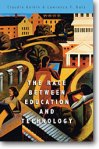
“The Race Between Technology and Education”

13 May 2009

GOLRACAnother important book imprisoned in academic chains…

The Race Between Technology and Education makes a simple but profound argument for American public policy. We are not educating enough people to keep pace with the evolution of technology in the 21st Century. The historical record, according to authors Claudia Goldin and Lawrence F. Katz, reveals that from around 1910 until around 1980, the numbers of educated Americans grew fast–even faster than the well-documented proliferation of new technology in the same period. The US thus grew its “human capital.”

The technology continues to improve. The education, not so much.


Why Build a Bridge when the River is Shallow?

13 May 2009

180px-NetworkTopology-MeshGwen Shaffer, a doctoral candidate, adjunct professor and researcher in communications at Temple University, recently recieved a National Science Foundation grant to complete her dissertation on the potential for high-speed, hyperlocal, robust ad hoc “mesh networks” to bridge the so-called “digital divide.” 

Shaffer says that when someone opens up a network to the neighbors, “it creates a sense of community” that corporate internet access simply cannot provide. The technology is simple; Shaffer has seen how it works in Berlin and Barcelona, as well as bucolic Denmark. This is technology that bears watching.