1493: Uncovering the New World Columbus Created, by Charles C. Mann

13 March 2012


imageClose your eyes and picture this: You’re staring from the deck of a small ship at the land now known as Virginia. The year is 1607, and you are Capt. John Smith. What you see in your mind’s eye is probably something like the images that open Terrence Malick’s 2005 film The New World: a virgin forest of stately trees bathed in that certain slant of light. What you’re ignoring is the understory.

In the science of forestry, the understory is the mix of seedlings and saplings, shrubs and herbs and all the smaller trees that grow happily in the shade of the bigger trees or wait patiently for wind or fire to expose them to the sun.

In the discipline of history, “understory” doesn’t mean anything. I wish it did, because the word would elegantly describe Charles C. Mann’s 1493, which is about some of the people, animals and plants ignored by “world history.” Mann’s previous book, 1491, drew attention to Native American societies before the European conquest. (The reason that the English walked so easily through the Virginian understory was that it was anything but virgin: it had been worked for generations by the natives.) Now, in 1493, Mann lays out the ecological and economic interplay of the European and, importantly, African arrival in America; Mann’s epic ambition spans continents, themes and five centuries of history.


Walking Tour of the Low Line Philadelphia October 15

25 October 2011

This slideshow requires JavaScript.


“Where the Skills Are:” But You Can’t See Them

23 September 2011

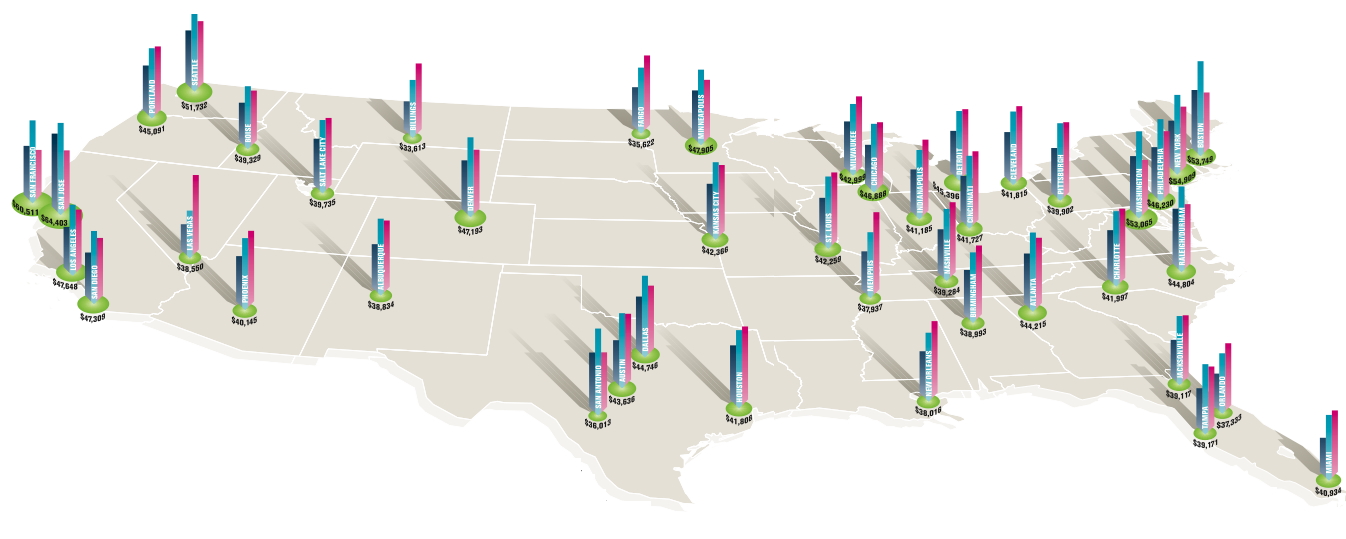
Richard Florida offered an interesting take on the importance of  “social skills” in Where the Skills Are – Magazine – The Atlantic.

The map that illustrates the article is merely that: an illustration. We have –and I mean, I have–the technological skills to create maps that can be used as tools. Whatever you call this particular hodgepodge, it fails as a map, as a chart, and frankly even as an illustration. It presents no visual information, no way to tease out any information, and yet, does offer shadows of an impossible early-morning sun.


Too Many Laws

10 June 2011

Philanthropist George Soros has not communicated his opinion of state laws that restrict telephone use by automobile drivers. But his latest essay, “My Philanthropy” (New York Review of Books, June 23, 2011, Vol. LVIII No. 11), offers a hint of how this fascinating wealthy man would prefer to see scientific research driving public policy.

As I see it, mankind’s ability to understand and control the forces of nature greatly exceeds our ability to govern ourselves. Our economy has become global; our governance has not. Our future and, in some respects, our survival depend on our ability to develop the appropriate global governance. This applies to a variety of fields: global warming and nuclear proliferation are the most obvious, but the threats of terrorism and infectious diseases also qualify; so do global financial markets.

Global governance could improve our response to infections disease, and to public health more broadly, no doubt. But mere national governance, in the United States, would go a long way toward, say, making our highways safer by prohibiting cell-phone use by drivers. As it stands now, according to recent research sponsored by Public Health Law Research,

Thirty-nine states and the District of Columbia have at least one form of restriction on the use of MCDs [mobile communications devices] in effect. The laws vary in the types of communication activities and categories of driver regulated, as well as enforcement mechanisms and punishments. No state completely bans use of MCDs by all drivers.

(A map accompanies this paper. I have tried to map cell-phone driving laws by state, and it is neither simple nor clear, because the laws are a mess. Feel free to create a better map: the data that Ibrahim, Anderson, Burris and Wagenaaer collected are freely available there and here.)

Ibrahim, Anderson, Burris and Wagenaaer conclude that

State distracted-driving policy is diverging from evidence on the risks of MCD use by drivers.

despite the availability of data. This is where I turn to Soros, whose essay is as much about “why I love humanity” as it is “why I give away money.” Soros, like many of us, once learned that ” free speech and critical thinking would lead to better laws and a better understanding of reality than any dogma.” But…

If thinking has a manipulative function as well as a cognitive one, then it may not be necessary to gain a better understanding of reality in order to obtain the laws one wants. There is a shortcut: “spinning” arguments and manipulating public opinion to get the desired results. Today our political discourse is primarily concerned with getting elected and staying in power. [The] hidden assumption that freedom of speech and thought will produce a better understanding of reality is valid only for the study of natural phenomena. Extending it to human affairs is part of what I have called the “Enlightenment fallacy.”

Soros, notorious for his distaste for George W. Bush, FOX News, and Karl “We create our own reality” Rove, explicitly calls out the Republicans for their manipulation of the public, but recognizes that it’s a bigger problem. He concludes that the message he is trying to communicate is “a profound rethinking of the workings of our political system.” He could invest  some millions in the dautning task of changing the public attitude toward public health and public policy.


ResearchBlogging.orgIbrahim, J., Anderson, E., Burris, S., & Wagenaar, A. (2011). State Laws Restricting Driver Use of Mobile Communications Devices American Journal of Preventive Medicine, 40 (6), 659-665 DOI: 10.1016/j.amepre.2011.02.024

Only Science Can Save Us, but Science Alone Can’t Save Us

26 May 2011

Chris Mooney, writing about the recently un-raptured believers, climate change skeptics, and Moms who refuse to vaccinate, in Mother Jones (“Rapture Ready: The Science of Self Delusion,”  May/June 2011) comes to the melancholy conclusion that science has proven that science seldom changes anyone’s mind; rather,

people respond to scientific or technical evidence in ways that justify their preexisting beliefs.

Mooney writes

…when we think we’re reasoning, we may instead be rationalizing. Or to use an analogy offered by University of Virginia psychologist Jonathan Haidt: We may think we’re being scientists, but we’re actually being lawyers (PDF). Our “reasoning” is a means to a predetermined end—winning our “case”—and is shot through with biases. They include “confirmation bias,” in which we give greater heed to evidence and arguments that bolster our beliefs, and “disconfirmation bias,” in which we expend disproportionate energy trying to debunk or refute views and arguments that we find uncongenial.

I recommend Haidt’s essay, “The Emotional Dog and its Rational Tail,” published in Psychological Review in 2001. He has a gift for a telling analogy, as evidenced by the title. Involved as I am in public health law research, I am most taken by what Haidt calls

The Motivated Reasoning Problem: The
Reasoning Process Is More like a Lawyer Defending
a Client than a Judge or Scientist Seeking Truth.

But this metaphor describes pretty accurately the way that that public health research is incorporated into public health law: Something terrible happens, a law is passed in response, and (maybe) later we get around to research to show that the law worked. A teen texting and driving is killed in an automobile accident; citizens demand a response, and a law is passed. This seems modeled on what Haidt calls “social intuitionism.”

The central claim of the social intuitionist model is that moral judgment is caused by quick moral intuitions, and is followed (when needed) by slow, ex-post facto moral reasoning.

It also helps explain why there is such a bewildering variety of laws about distracted driving, for instance. And why all these laws seem to be based on no conclusive evidence.

ResearchBlogging.org
Haidt, J. (2001). The emotional dog and its rational tail: A social intuitionist approach to moral judgment. Psychological Review, 108 (4), 814-834 DOI: 10.1037/0033-295X.108.4.814


“How Many Pennsylvanians Live Within 25 Miles of a State Park?”

19 May 2011

Maurice Goddard, the head of the Pennsylvania Department of Forests and Waters from 1955 until 1979, was the godfather of the State Parks system.In 1955, “Goddard took the position and set a goal of a state park within 25 miles of every resident of Pennsylvania. “We took a big map of Pennsylvania and drew circles around Philadelphia, Pittsburgh, the Wyoming Valley, and Harrisburg,” he said.”Today we can improve on Goddard’s primitive geographic information system. I created a series of maps for the Pennsylvania Parks and Forests Foundation on Goddard’s theme. The first two maps I produced, using data from the Pennsylvania Spatial Data Access (PASDA) website, concentrated on population. One showed the largest cites on Pennsylvania and its parks; the other the most populous year 2000 census tracts.

Read the rest of this entry »

A Coke and a Smile?

29 March 2011

How can a law improve public health? In 2011, Public Health Law Research is asking “What is the impact of laws addressing consumption and purchase of sugar-sweetened and citric-acid drinks on oral health? ” The study, based at the Appalachian School of Law, is looking at “Mountain Dew Mouth” in Appalachia, the persistently poor teeth among America’s  impoverished hillfolk.

Back in 1911, in a courtroom in Chattanooga, it was caffeine, not sugar, that was on trial. According to Murray Carpenter in today’s (March 28, 2011) New York Times,

The trial grabbed headlines for weeks and produced scientific research that holds up to this day — yet generated no federal limits for caffeine in foods and beverages.

Those levels remain virtually unregulated today. As two researchers recently wrote in The Journal of the American Medical Association, nonalcoholic energy drinks “might pose just as great a threat to individual and public health and safety” as alcoholic ones, and “more research that can guide actions of regulatory agencies is needed.”

Nobody used the term “energy drink” in 1911, but the drink that was on trial in Chattanooga contained as much caffeine as a modern Red Bull — 80 milligrams per serving.

The drink was Coca-Cola.

It’s an entertaining story, and also, in the end, enlightening if dispiriting to twenty-first century public health law researchers.  “Harvey Washington Wiley, the “crusading chemist” who led the Bureau of Chemistry in the United States Department of Agriculture, had brought a lawsuit against the Coca-Cola Company, accusing it of adulterating the drink by adding a harmful ingredient: caffeine.” The Atlanta company hired its own expert to to test people who drank the stuff, taking advantage of the fact that most existing research had served Coke only to lab rats. The result was

a four-week trial dominated by anecdotal, contradictory or sloppy testimony.

“[The Coca-Cola scientist’s] testimony was by far the most interesting and technical of any yet introduced,” The Chattanooga Daily Times reported. But the jury never issued a verdict based on the science, because a week later the judge granted Coca-Cola’s motion to dismiss.

In court, it’s seldom the science or research that decides the case.


Seeing Is (or Would Be) Believing

22 March 2011

Patty Cohen writes on the “digital humanities” in The New York Times today (22 March, 2001), and misses an opportunity to show us what information technology can do for the liberal arts. She highlights a few unrepresentative projects, and ignores the big question: What can the non-scientific researchers in literature, philosophy, history and the rest of the humanities concoct when given access to great stores of data, and how do they react? Cohen tells us a little and shows us less.

Humanists have always had data; what makes digital data different is the play and the display: you can see the data better and have some fun with it, too.

The title, for which Cohen may not be responsible, is “Giving Literature Virtual Life.” But her story is lifeless.

At the University of Virginia, history undergraduates have produced a digital visualization of the college’s first library collection, allowing them to consider what the selection of books says about how knowledge was classified in the early 18th century.

A library visualization? What does that mean? I would need to see such a thing. Even online, the story offers no link. So here it is, for all to see. Two things make make this a visual representation of the 1828 U. Va. library catalog: maps that neatly mark where the books came from and charts that reveal what they were about. The VisualEyes technology that supports this project allows humanists to create visualizations; ten such projects are demonstrated at that link.

Cohen spends a lot of time at Bryn Mawr College, gushing about teaching Shakespeare with

Their assignment was to create characters on the Web site theatron.org and use them to block scenes from the gory revenge tragedy “Titus Andronicus,” to see how setting can heighten the drama.

“Until you get Shakespeare on its feet, you’re doing it an injustice,” [student] Ms. Cook said. “The plays are in 3-D, not 2-D.”

Cook lacks a basic understanding of what three-dimensional means, believing perhaps it was invented by James Cameron for Avatar. Shakespeare’s plays were created indeed as performances. Until you see them performed, or better yet, get on your feet and perform them, you are doing the Bard an injustice indeed.

Cohen writes thats scholars are only beginning to explore “the contours of this emerging field of digital humanities.” I approve of the metaphor, but reporters too have much more to learn.


Texting and Driving: Does the Punishment Fit the Crime?

15 March 2011
In New Jersey, columnist Bob Ingle, writing in the Cherry Hill Post-Courier, says that a recent effort to make distracted driving illegal is
more a movement to bring in additional revenue than get tough with what is a serious and often deadly problem.
Ingle supports the law, and cites research in support as well.  But if the state really wants to stop distracted driving, he says it should put offenders in jail, not simply fine them.
If texting and hand-held cell talking while driving is the equivalent of driving under the influence, why don’t they make the penalties reflect that?
The database of distracted driving laws at Public Health Law Research provide information about the penalties for various violations across the fifty states.

Dirty Skies and Murky Mechanisms

11 March 2011

Art by Molly Statt

Yesterday, a House subcommittee voted to strip the Environmental Protection Agency of its power to regulate greenhouse gases, chipping away at a central pillar of the Obama administration’s evolving climate and energy strategy. According to the Environmental Protection Agency’s finding on Dec. 7, 2009:

the current and projected concentrations of the six key well-mixed greenhouse gases — carbon dioxide (CO2), methane (CH4), nitrous oxide (N2O), hydrofluorocarbons (HFCs), perfluorocarbons (PFCs), and sulfur hexafluoride (SF6) — in the atmosphere threaten the public health and welfare of current and future generations.

I added the italics, to make clear that the EPA was saying that these greenhouse gasses are a threat to the public health. The agency is not hypothesizing that greenhouse gasses cause global warming which causes bad public health. Or is it? Is there a hidden assumption in their science? It might be well be true that a warmer planet is bad for us: What do scientists say? Reporting on House hearings about EPA in The New York Times (March 8, 2011) John Broder wrote that

committee Democrats rounded up five eminent academic climatologists who defended the scientific consensus that the planet is warming and that human activities like the burning of fossil fuels are largely responsible. The professors called for swift and concerted action to reduce emissions of greenhouse gases like carbon dioxide…

while

Republicans countered with two scientific witnesses who said that while there was strong evidence of a rise in global surface temperatures, the reasons were murky and any response could have adverse unintended effects. Another scientist said that the E.P.A.’s decision to ban the pesticide DDT 40 years ago had led to a huge increase in death and disease in the developing world.

“At House E.P.A. Hearing, Both Sides Claim Science” was the Times’ headline, and I guess it’s true. So let’s take seriously the Republican scientist skeptical of the DDT ban. He asks a valid question, one we could answer with evidence: Does the prohibition of certain pesticides help or harm the public health? We would have to consider at least two mechanisms: how does a lack of pesticide affect food production, as well as, how does pesticide cause disease?

What I’m missing in the larger debate here about the EPA, greenhouse gasses and global warming is a mechanism: how does global temperature affect public health?