The Rosy Glow of Academic Charisma

14 May 2009


vertical1OpenCourseWare (The Christian Science Monitor, 5.14.09) is an egalitarian ideal: you can learn everything you could learn in, say, an MIT degree program, at no cost on your home computer.

The elephant in this classroom? Most people don’t attend universities to learn something, but to earn something: the rosy glow of academic charisma. An autodidact is always suspect.


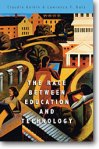
“The Race Between Technology and Education”

13 May 2009

GOLRACAnother important book imprisoned in academic chains…

The Race Between Technology and Education makes a simple but profound argument for American public policy. We are not educating enough people to keep pace with the evolution of technology in the 21st Century. The historical record, according to authors Claudia Goldin and Lawrence F. Katz, reveals that from around 1910 until around 1980, the numbers of educated Americans grew fast–even faster than the well-documented proliferation of new technology in the same period. The US thus grew its “human capital.”

The technology continues to improve. The education, not so much.


Why Build a Bridge when the River is Shallow?

13 May 2009

180px-NetworkTopology-MeshGwen Shaffer, a doctoral candidate, adjunct professor and researcher in communications at Temple University, recently recieved a National Science Foundation grant to complete her dissertation on the potential for high-speed, hyperlocal, robust ad hoc “mesh networks” to bridge the so-called “digital divide.” 

Shaffer says that when someone opens up a network to the neighbors, “it creates a sense of community” that corporate internet access simply cannot provide. The technology is simple; Shaffer has seen how it works in Berlin and Barcelona, as well as bucolic Denmark. This is technology that bears watching.  

Why Research Matters

3 April 2009
Responding recently to the news of increased funding for the National Institutes of Health and National Science Foundation, A. J. Stewart Smith, the dean for research at Princeton, said “This is a miracle, I think.” That’s an unexpected claim coming from a particle physicist, but the real miracle of research funding is what happens after the government spends its money.

Investments in scientific research return financial dividends that would make a hedge fund envious. The “multiplier” for Federal dollars spent on NIH funding is better than it for most spending. Families USA, the national organization for health care consumers, measured the benefits of NIH research awards to all 50 states in 2007. “In Your Own Backyard,” their study, calculated that the NIH awarded almost $23 billion in research grants and contracts. That funding created more than 350,000 new jobs nationwide, generated more than $18 billion in wages from those new jobs, and spurred more than $50 billion in business activity.

The year 2009-2010 will be the most exciting in decades for university research. It’s no leap of faith to believe that energy, health care and education are the keys to raising the United States from its economic mess, and President Obama has promised that spending in those fields will increase. Universities such as Temple will benefit from the improved funding for education; less well understood perhaps is how important research is in American higher education.

Research at schools such as Temple University has many goals, and tries to reach those goals in many different ways. Some researchers are trying to cure diseases, some are trying to create more efficient technology. Many researchers are just trying to understand the mysteries of modern life. The immense transformative power of research and innovation can improve the lives of Americans. Infrastructure to improve America’s competitiveness and technology to solve our nation’s most pressing problems — providing clean energy, lowering healthcare costs, and improving public safety.

Scientific research has yielded innovations that have improved the landscape of American life — technologies like the Internet, digital photography, bar codes, Global Positioning System technology, laser surgery, and chemotherapy. At one time, educational competition with the Soviets fostered the creativity that put a man on the moon. Today, we face a new set of challenges, including energy security, HIV/AIDS, and climate change.

Research at Temple has resulted in products that benefit all of us in small ways–a cheaper healthier roach trap, for instance–as well as large. The world’s first institute dedicated to providing the pharmaceutical industry with environmentally sound processes just opened here–withe the help of the Commonwealth of Pennsylvania and the National Science Foundation.

Yet, the United States is losing its scientific dominance. Among industrialized nations, our country’s scores on international science and math tests rank in the bottom third and bottom fifth, respectively. Over the last three decades, federal funding for the physical, mathematical, and engineering sciences has declined at a time when other countries are substantially increasing their own research budgets. Scientific research must play an important role in advancing science and technology in the classroom and in the lab.

Investing in scientific research serves a dual purpose: it is an immediate stimulus to the economy and an investment in US leadership in science, engineering, technology and education. Investments in medical research in particular can address urgent health-care needs.

Spending on science, engineering and technology is only a part of the stimulus package. But it is important to recall that basic science research in the US is largely funded by grants to individual investigators or national laboratories from federal agencies such as the NIH and NSF. Federal money invested in research grants, scientific infrastructure or national laboratories can be spent immediately to support research programmes already approved, salaries for laboratory scientists, purchases of supplies and equipment (most from small US businesses) and institutional expenses of the colleges, universities and medical schools where researchers work. Much scientific research is “shovel-ready;” that universities facilities are in place and only need cash to run.

President Obama has often said that in the future, international prosperity will depend on the United States becoming an “innovation economy.” The administration’s economic recovery package includes added spending for areas favored by innovation policy advocates, including higher research and development spending and funds for high-technology fields like electronic health records. But it also represents a welcome return of science in the political discourse. The attitude towards science is changing in government.

When he announced his choice of Nobel-prize-winning physicist Steven Chu to head the energy department, Obama said that promoting science is not just about providing resources (though he has promised to double the budget for basic science research over the next decade), but also about promoting free inquiry and listening to what scientists have to say, “especially when it is inconvenient.” That’s a clear reference to Al Gore’s “Inconvenient Truth” about global warming. A government that puts its faith in science also reminds what we expect from research: the miracles that result when we practice science with faith in the future. 

NIH Announces American Recovery and Reinvestment Act Funding Opportunities, March 11, 2009

26 March 2009

NIH Announces American Recovery and Reinvestment Act Funding Opportunities, March 11, 2009
News Release – National Institutes of Health (NIH)

Posted using ShareThis


NIH: What FDR Lacked–And BHO Has

26 March 2009

The National Institutes of Health like to claim that they were founded in 1789–and who can blame them? An institution thats as old as the Republic.

But the NIH only really got organized in 1938. When FDR wanted to stimulate the depressed economy with federal spending, research dollars really were no option.

But today we know that a dollar spent to fund basic health research typically adds two dollars to the national economy. This is the great multiplier.


Out-of-this-world glow-in-the-dark creatures invade Philly

19 March 2009

Martin Chalfie to Speak at Research Week at Temple University March 27

2008 Nobel Chemistry Laureate discovered green fluorescent proteins
EDITOR’S NOTE: Photos of Chalfie and other bizarre creatures are available.

MEDIA CONTACT: Paul Statt, Paul Statt Communications, 413-244-7456, paulstatt@paulstatt.com

PHILADELPHIA, Feb. 9–Green fluorescent proteins can make goldfish glow in the dark. But that’s not why they gave chemist Martin Chalfie the Nobel Prize last year. Chalfie and two colleagues isolated and developed the naturally-occurring green fluorescent protein (GFP) from a jellyfish. The GFP glows green when exposed to blue light, and the gene that makes it has been added to organisms as diverse as bacteria, yeast, insects and even humans, to prove that “alien” genes can be inserted, expressed and passed on. In short, fluorescence is possible in every living thing.

Chalfie, the William R Kenan Jr. Professor of biological sciences at Columbia University, will about “Green Florescent Protein:Lighting Up Life” at 10 a.m. on Friday, March 27, in the Walk Auditorium in Ritter Hall at Temple University. The keynote address of Temple’s annual Research Week, sponsored by the Office of the Senior Vice President for Research and Strategic Initiatives, Chalfie’s talk is free and open to the public. Research Week, from Monday, March 23 through Friday, March 27, offers lecturers, colloquia, presentations and performances at the university.

Chalfie reports that he hears from hundreds of researchers who describe the out-of-this world potential of GFP:

  • GFP was used in ANDi, the first genetically-modeified primate, being used to develop treatments for Huntington’s disease ;
  • GFP is being used in the creation of synthetic life; 
  • GFP flickers at different temperatures, allowing it to be used as a tiny thermometer
  • GFP-labelled bacteria can locate mines in minefields.

###

Research Week March 23-27

6 March 2009
Temple University Considers Health Disparities, Aging Women, and Green Fluorescent Protein at Annual Research Week

Symposia, Lectures, Exhibits and Performances Are Highlights

Contact: Paul Statt, Paul Statt Communications, 413-244-7456, paulstatt@paulstatt.com

PHILADELPHIA, March 2–The Office of the Senior Vice President for Research & Strategic Initiatives at Temple University will hold its inaugural observation of Research Week from Monday,  March 23 , through Friday, March 27, to coincide with Temple’s celebration of its 125th Anniversary. This week will celebrate and highlight the accomplishments and contributions of Temple faculty, employees and students in the areas of research, collaboration and creativity. Martin Chalfie, a 2008 Nobel Laureate in Chemistry, will give the research week keynote address, “Green Fluorescent Protein – Lighting Up Life,” on Friday, March 27, at at 10 a.m. in Walk Auditorium in Ritter Hall. All are invited and no registration is required.

A Health Disparities Research Panel will convene on Tuesday, March 24, at 10 a.m. in the Student Faculty Center, Auditorium; Health Sciences Center. The panel will be moderated by Larry F. Lemanski, Ph.D., Senior Vice President for Research and Strategic Initiatives, and includes Michael D. Brown, Ph.D., Associate Professor, Kinesiology and Public Health, College of Health Professions; Raul A. de la Cadena, M.D. Assistant Dean and Director of the Recruitment, Admissions and Retention (RAR) Program at Temple University School of Medicine and Associate Professor, Physiology and Thrombosis Research, School of Medicine; Gary D. Foster, Ph.D., Professor, Medicine and Public Health, and Director, Center for Obesity Research and Education, School of Medicine; and Grace X. Ma, Ph.D., Professor, Public Health and Director, Center for Asian Health, College of Health Professions.
Innovations: Path to Market, presented by the Office of Technology Transfer and Office of Strategic Initiatives, starts on Tuesday, March 25 at 1 p.m. in the  First Floor Student Lounge, Fox School of Business. Registration is required, call Michelle Green, Office of Technology Transfer, 215-204-5732, mwgreen@temple.edu Session 1: Advancing Technology Commercialization Transferring Your Invention to Marketplace – Stephen Nappi, Director, Office of Technology Transfer, and John Aybar, Director, Office of Strategic Initiatives and Corporate Partnerships The QED Proof-of-Concept Program: a New Funding and Advisory Program to Support Life Science R & D – Stephen S. Tang, Ph.D., CEO, University City Science Center and Christopher Laing, MRCVS, Ph.D., Director of Science and Technology, University City Science Center Protecting Your Ideas – Stephen J. Weed, Shareholder, RatnerPrestia Session 2: Establishing a New Business Evaluating the Commercial Opportunity – TL Hill, Managing Director, Enterprise Consulting Practice, Fox School of Business Accessing Expert Guidance for Start-ups – Karen Hanson, Ph.D., Executive Director, Biostrategy Partners, BioLaunch 611+KIZ Presenting Your Company to Investors – Jaine Lucas, Executive Director, Innovation and Entrepreneurship Institute, Fox School of Business.
The 5th Annual Women’s Health Interdisciplinary Research Symposium on Healthy Aging will take place on Thursday, March 26, at 8:30 a.m., in Mitten Hall. Marie Bernard, M.D., Deputy Director, National Institute on Aging, will deliver the keynote address “Is Today’s 60 the New 50? – Women’s Health Issues from the NIA Perspective.” A research panel will follow, moderated by John Cacciamani, M.D., Associate Director, Institute on Aging, and Section Chief, Division of Geriatrics, Temple University School of Medicine and Medical Director, Clinical Informatics, Temple University Hospital; with Adam Davey, Ph.D, College of Health Professions- Support to Older Adults and Unmet Need: Linking Individual and State-level Data; Roberta Newton, P.T., Ph.D., College of Health Professions- Active Aging: Reducing Falls and Fear of Falling; Vani Dandolu, M.D., School of Medicine, Demystifying Common Myths in Women’s Health; Nancy Henkin, Ph.D., Center for Intergenerational Learning, College of Health Professions –Connection and Contribution: Civic Engagement Later in Life; Poster Session and Networking More information is available at http://www.research.temple.edu/whrla/whrlaresrchday.html

The Law School Faculty Colloquium series opens on Monday March 23 at 12 noon with a talk by Lee Anne Fennell, University of Chicago Law School, Faculty Colloquium Series, School of Law, and continues on Tuesday,March 24 at 4 p.m. with a talk by André Nollkaemper, University of Amsterdam, International Law Colloquium, School of Law (Registration is required, contact Jane Baron at jane.baron@temple.edu )
Performances of Brecht’s The Caucasian Chalk Circle, directed by Armina LaManna, will take place every evening from March 19 through 29 in the Tomlinson Theater/ Curtain times vary; more information is available at: http://www.temple.edu/sct/theater/currentseason/index.html. On Wednesday, March 25, at 12 noon in the auditorium in Ambler Learning Center, Ambler Campus, a Community Concert will take place. With works by Haydn, Tchaikovsky, Bruch and Popper, the program features  Jeffrey Solow, Professor of Violoncello and Chamber Music, Chair, Instrumental Studies, on cello: and Elise Auerbach, Lecturer, Voice on piano.
Several exhibitions are planned as part of Research Week. On Wednesday, March 25, 10 a.m., the Foundation Exhibit, a juried show of student work, will open in the Stella Elkin Galleries, Tyler School of Art, Lower Level (10 a.m. to 5 p.m., Wednesday through Saturday). At 11 a.m. the  MFA 2009 Thesis Exhibitions will open in the Temple Gallery, Tyler School of Art, (11 a.m. to 5 p.m. Wednesday through Saturday). The artists and the medium in which they work are Katie Miller, Glass; Alex Adams, Glass; Erin Riley, Fibers; and Gretchen Batcheller, Painting; For more information, http://www.temple.edu/tyler/exhibitions. “In Memory Of”, a multidisciplinary community arts program to bring awareness of the impact of violence on North Philadelphia using photography, audio and video by Pepón Osorio (Tyler School of Art) and Karen Turner (School of Communications and Theater) will run all week on the first floor of Tyler School of Art
On Monday, March 23, at 10 a.m. in the Health Sciences Center, Student Faculty Center, Room C., “Relax, Re-energize and Release (Stress): Tips and Techniques for the Research Administrator,” will be offered. 
On Tuesday, March 24, at 2:30 p.m. in Paley Library Lecture Hall, Mark Moskowitz will discuss “Books and Filmmaking” with reference to the rediscovery of “Stones of Summer.”
On Tuesday, March 24, at 2:40 p.m. in Rock Hall Auditorium, Boyer College of Music and Dance, Christopher Maltman, baritone, will offer a Master Class. 
On Wednesday, March 25, at 11 a.m. at 1947 N. 12th St.,tthe Science, Engineering and Architecture Library (SEAL) will present the Second Annual e-Resources Fair , an opportunitty to learn about e-journals, e-books and databases licensed by Temple University Libraries.  http://blog.library.temple.edu/events/archives/2009/03/science_engineering_and_archit.html
On Wednesday, March 25, at 2 p.m. in the FSC Auditorium, Health Sciences Center, the Office of Clinical Research Administration will present “How to Conduct Clinical Research at Temple/”
On Thursday, March 26, at 8:30 a.m. in the Student Center and multiple locations, the Temple Undergraduate Research Forum will present a Creative Works Symposium (TURF-CreWS) on The Environment and Sustainability. http://www.temple.edu/vpus/programs_initiatives/turf/index.htm
On Thursday, March 26, at 2:30 p.m., “Chat in the Stacks,” an ongoing cross-disciplinary series highlighting and promoting excellence in faculty research, creativity and scholarship; Paley Library Lecture Hall. http://blog.library.temple.edu/events/archives/2009/03/chat_in_the_stacks_march_26_23.html

On Friday, March 27, at 8 a.m. in Room 300, Tuttleman Learning Center,the School of Communications and Theater will present the  ABGraduate Student Competition Research Forum.

On Friday, March 27, at 1 p.m. in Room 102, 1247 N.12th St., the College of Science & Technology and College of Engineering will present Research Poster Sessions followed by a joint Graduate Programs Open House from 4:30 to 6:30 p.m.
###


George Tuszynski

23 February 2009
Like many biomedical researchers, George Tuszynski would like to cure cancer. But in his quest, he may have stumbled across a solution to a humbler problem: wrinkled skin. Professor of Neuroscience in Temple’s School of Medicine and Professor of Biology in Temple’s College of Science and Technology.

Tuszynski and his group, along with In Kine Pharmaceutical Co., a small pharmaceutical company based in Blue Bell, PA, have developed three molecules that prevent tumor growth by inhibiting blood vessel formation, which is called angiogenesis. One of the molecules has been named angiocidin, while the other two are peptides.
Angiocidin, a tumor-inhibiting novel protein discovered by Temple University researchers, was revealed last year to have a therapeutic application in treating leukemia. The study, “The Novel Angiogenic Inhibitor, Angiocidin, Induces Differentiation of Monocytes to Macropahges,” published in 2008 in the journal Cancer Research. The research was done by Temple biology doctoral student Anita Gaurnier-Hausser under Tuszynski’s direction.

What cancer has in common with aging skin is that in both conditions, cells have stopped growing properly. Stem cells, characterized by their ability to renew themselves through mitotic cell division and differentiating into a diverse range of specialized cell types, create healthy well-behaved cells. Tuszynski has shown that he “can repair damaged skin. Given the right stem cells, you can make the cells grow up and behave.”

“Angiocidin is a protein that has a lot of anti-cancer activity and inhibits angiogenesis, a physiological process involving the growth of new blood vessels from pre-existing vessels, which is a fundamental step in the transition of tumors from a dormant state to a malignant state,” said Tuszynski, who discovered the protein.
Tuszynski said that over the years, the researchers had looked at the protein’s effect on solid tumors like breast cancer, prostate cancer and colon cancer. 

“All of these cancers are inhibited by Angiocidin by virtue of the fact that this protein inhibits vascularization or the formation of new vessels,” he said. “We decided we wanted to look to see if Angiocidin had any effect on hematologic malignancy, and we chose leukemia.”

Tuszynski said leukemia cells arise from monocytes, a specific white blood cell that is a part of the human body’s immune system that protects against bloodborne pathogens and moves quickly to sites of infection. As monocytes enter tissue, they undergo a series of changes to become macrophages.
When the researchers treated the leukemia cells, “our molecule was able to induce a differentiation of these monocytic leukemia cells into a normal, macrophage-like phenotype,” he said.
“This indicates perhaps a new therapeutic application for this protein, that it could differentiate hematologic malignancies into a normal-like state, allowing then for chemotherapy because normal cells are susceptible to chemotherapy treatment,” said Tuszynski, who is also a member of the Sol Sherry Thrombosis Research Center in Temple’s School of Medicine.
He added, however, that Angiocidin must remain present with the differentiated cells or they will revert back to their leukemia phenotype. “We haven’t repaired the genetic abnormality in the cell, but what we have done is push them into a more normal phenotype that could then be treated more easily.”
Tuszynski also said that the research demonstrates the ability of Angiocidin to stimulate the body’s immune system by differentiating monocytic cells into macrophages, which function to ingest bacteria and protein debris as part of the immune system.
“We did gene array analysis of the differentiated versus the undifferentiated cells and we discovered that there were many genes characteristic of immune cells that were up-regulated in the differentiated leukemia cells,” he said. “That Angiocidin can stimulate differentiation and stimulate the immune system is basically a new activity that we discovered with this protein that we had never really anticipated before.”
The research was funded by the National Institutes of Health and Temple University.
In 1987, our laboratory first showed that thrombospondin -1 (TSP-1), a platelet protein, functioned as a cell and platelet adhesive protein and that TSP-1 could promote metastasis formation in a murine model of experimental metastasis. Since then we have identified structural domains within the TSP-1 molecule and a new TSP-1 receptor that may mediate cell-cell and cell-substratum interactions operative during the metastatic cascade and the process of angiogenesis. We found that a number of peptides homologous to CSVTCG promoted the adhesion of a variety of normal and tumor cells and inhibited platelet aggregation and tumor cell metastasis, whereas control peptides had no effect. Our results further demonstrated that these peptides inhibited tumor lung metastases and angiogenesis presumably by competing with endogenous TSP-1 for TSP-1 tumor cell receptor sites. This conclusion was further supported by the observation that anti-CSTSCG antibody, which specifically recognized TSP-1, inhibited TSP-1-dependent cell adhesion, platelet aggregation, and tumor cell metastasis, whereas control IgG had no effect. These results suggest that CSVTCG and CSTSCG present in the type I repeat sequences of TSP-1 function in the adhesive interactions of TSP-1 that mediate platelet aggregation, angiogenesis and tumor cell metastasis. 


The TSP-1 receptor specific for the CSVTCG residues in the type 1 repeats of TSP-1 was isolated from lung carcinoma by CSVTCG-Sepharose chromatography. Anti-receptor IgG and inhibited lung carcinoma cell spreading and adhesion and platelet adhesion on TSP-1 but not on fibronectin and laminin. Anti-CSVTCG receptor antibody blocked breast cancer invasion in vitro and metastasis and tumor progression in an in vivo athymic model of breast cancer progression. These data as well as immunohistochemical studies showing that this receptor highly over-exepressed in breast carcinoma and its neovasculature as well as many other tumors, including lung, melanoma, ovarian, prostate, pancreatic, colon, gastric, and hepatocelluar carcinoma and that this receptor is predictive of poor patient outcome in squamous carcinoma of the head and neck strongly support the conclusion that both TSP-1 and its receptor mediate cancer progression. 


The receptor has recently been cloned and expressed as a soluble protein in bacteria. Recombinant protein, referred to as angiocidin, specifically inhibited endothelial adhesion, tube formation and viability, while having no effect on a variety of cells including fibroblasts, smooth muscle cells, and tumor cells. Angiocidin localized to the vasculature and inhibited Lewis Lung carcinoma and B16F10 melanoma growth in mice by more than 95%. Similarly, a monoclonal receptor antibody inhibited more than 50% tumor growth. Therefore, angiocidin may be new target for the development of an anti-angiogenic agent for the treatment of cancer. 


Based on these results, we believe that CSVTCG peptides and the CSVTCG specific TSP-1 receptor (angiocidin) are targets for the development of cancer therapeutics, angiogenesis inhibitors and imaging agents as well as anti-thrombotics. Preclinical studies are now underway in preparation for the use of angiocidin, anti-angiocidin antibodies and the CSVTCG peptides for the treatment of cancer in man. Finally our laboratory is searching for new molecules and new mechanisms that can be targeted for development of cancer therapeutics and diagnostics. In collaboration with Dr. Mahesh Sharma, we have identified annexin II as a potential receptor mediating angiogenesis and tumor progression. We have developed a monoclonal annexin II antibody that reduces tumor growth by more than 50%. This antibody may also find utility as a diagnostic tool for the detection of annexin II in sera and solid tumors.


Tom Gould

23 February 2009

Thomas J. Gould

woman-smoking.jpg


Learning and addiction are inked in the brain in unexpected ways, according to Thomas J. Gould, a professor of pharmacology at Temple University. The well-documented learning-related changes in the strength of neuronal connections in the brain not only underlie memory formation and storage but are also affected by drugs of abuse, such as nicotine or alcohol. The goal of Gould’s research is to use genetic, pharmacological, behavioral, molecular and electrophysiological techniques to study the effects of these drugs on the neurobiology of learning and memory.  


In 1988, the US Surgeon General concluded that tobacco products are addictive and that nicotine is the main pharmacological agent in tobacco responsible for tobacco’s addictive nature.  Many questions remain, however, about nicotine.  It is not completely understood what nicotine’s effects on neurological/behavioral function are nor is it understood why nicotine is addictive.  One reason for the incomplete understanding of nicotine addiction may be that addiction is a complex disorder with many factors contributing to the disease.  The symptoms of nicotine withdrawal, which can include physical symptoms, impairments in cognition, and mood dysfunction may be a critical factor in the high relapse rates that occur in cigarette smokers.  Furthermore, genetic factors may modulate the acute, chronic, and withdrawal effects of nicotine on cognition.  Although animal models have provided useful insight into the somatic and affective symptoms of nicotine withdrawal, little animal research has focused on the effects of nicotine withdrawal on learning. 


 Research from Gould’s lab uses contextual fear conditioning, a hippocampus-dependent form of classical conditioning, as an animal model for the effects of nicotine on cognition. The goals of the research are: to investigate the effects of nicotine on learning, to identify the cellular and molecular mechanisms that are altered by nicotine use, and to identify genetic factors that may contribute to nicotine-associated neurobehavioral effects.  Our laboratory uses behavioral, pharmacological, genetic, molecular, and electrophysiological approaches to address these questions. 

Nicotine addiction is a disorder that may be maintained by many factors, including nicotine withdrawal-associated deficits in cognitive processes.  One goal of our laboratory is to test pharmacological agents that can potentially reduce nicotine withdrawal-associated deficits in cognition.  Previous research has established that the noradrenergic system is involved in both learning and attention, and recent studies from our lab have demonstrated that nicotine withdrawal-associated deficits in contextual fear conditioning can be reversed by both nicotine replacement and by norepinephrine reuptake inhibitors.  By identifying cellular and molecular processes that can ameliorate the effects of nicotine, more effective smoking cessation strategies can be developed.

The Effects of Alcohol and Nicotine On Cognition 

Alcohol is frequently referred to as a “gateway” substance to nicotine use and abuse, and research has demonstrated that nicotine use in adolescents can predict a transition from social to problem drinking.  However, the reasons for why these two drugs are co-abused remain unclear, although several factors are likely to be involved.  One possible explanation for the co-abuse of nicotine and alcohol is that nicotine may reduce some of the negative symptoms of alcohol, such as disrupted cognition.  Evidence in favor of this explanation comes from studies that have shown that alcohol impairs learning in hippocampus-dependent and independent procedures, while nicotine can reverse these deficits.  An additional goal of our laboratory is to examine the neural substrates underlying the interactive effects of alcohol and nicotine on learning, and also to understand the effects of alcohol on learning when administered alone.  Understanding the interactive effects of these drugs on cognition will aid in developing more effective treatments for both alcoholism and nicotine addiction.